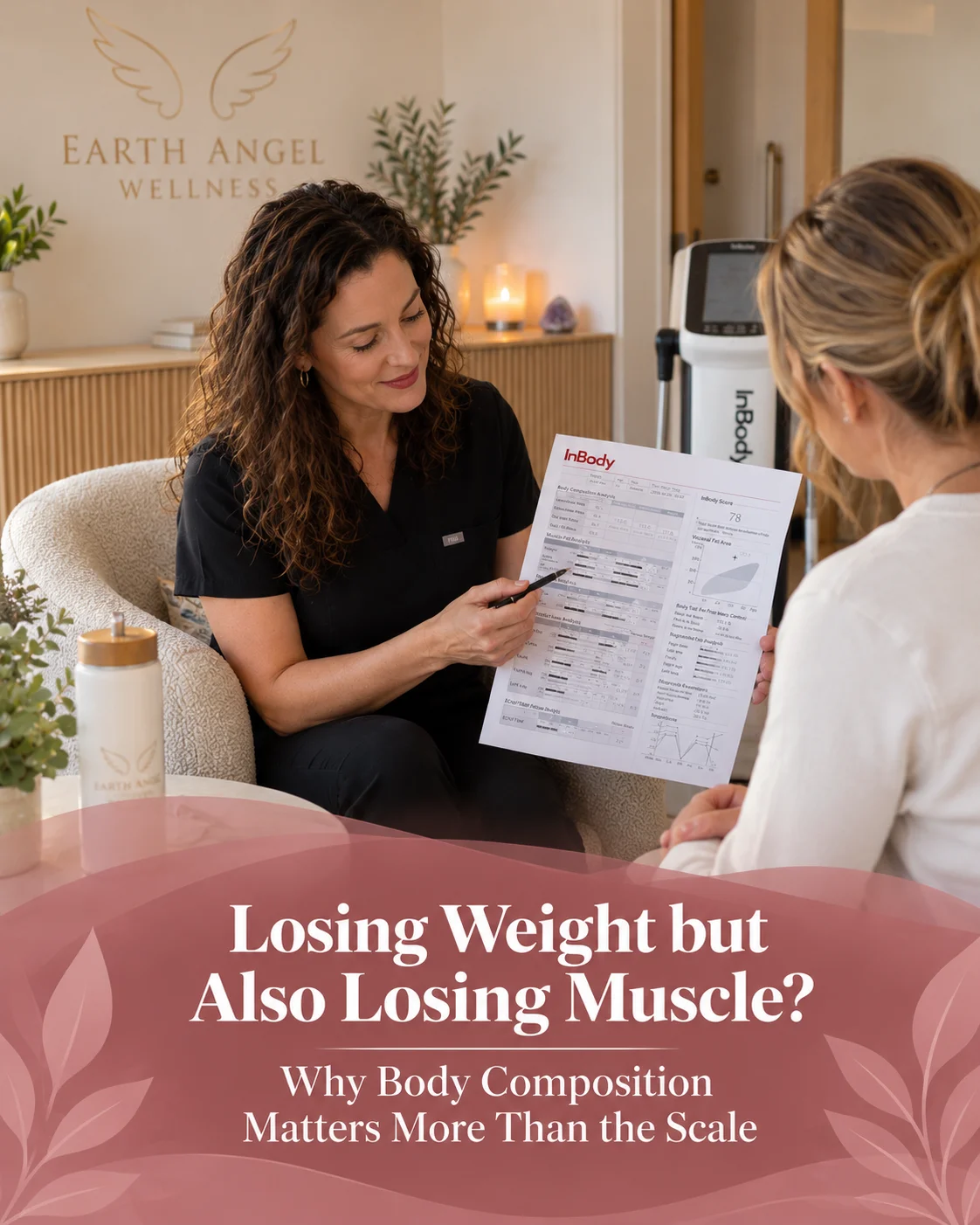
Losing Weight but Also Losing Muscle? Why Body Composition Matters More Than the Scale
Why Body Composition Matters More Than the Scale
The scale is moving down, but your workouts feel harder. You may be wondering whether you are losing fat, muscle, or both. Weight alone cannot answer that question.
Body composition looks at what makes up your weight. During weight loss, the goal is to reduce excess body fat while supporting the muscle and strength you rely on every day. The scale still matters, but it becomes more useful when you understand what is changing behind the number.
At Earth Angel Wellness in Salem, Oregon, we use InBody body composition monitoring alongside nutrition guidance and ongoing support to help clients look beyond pounds lost. Our focus is progress that supports strength, function, and long-term well-being.
Weight loss and fat loss are different
A lower weight can reflect changes in body fat, lean tissue, and water. Lean mass is not the same as muscle: it also includes water, organs, and other tissues. That distinction matters when interpreting a scan or reading about weight-loss research.
Muscle loss can occur during weight loss. In a randomized trial of older adults with obesity, participants lost lean mass even while exercising, although resistance training helped limit the loss compared with aerobic training alone. This is one reason a weight-management plan should consider strength and function as well as pounds lost. [1]
Two people can lose the same amount of weight and have different changes in body composition. Similarly, a slower-moving scale does not automatically mean a plan is failing. Your care team can help interpret weight trends alongside body composition, strength, and how you feel.
Why preserving muscle matters
Muscle supports movement and everyday independence. Carrying groceries, climbing stairs, getting up from a chair, and staying active all depend on muscular strength. Losing weight while becoming weaker deserves attention, particularly when maintaining an active lifestyle is one of your goals.
At Earth Angel Wellness, we want clients to feel heard when something is not working. If your strength is declining, your energy is low, or eating enough has become difficult, those concerns belong in the conversation about your care.
How InBody monitoring adds context
An InBody scan uses bioelectrical impedance to estimate body composition, including body fat and skeletal muscle mass. Comparing results over time can give your care team information a standard scale does not provide. [2]
These are estimates. Hydration, recent food intake, and exercise can influence readings. A single lower muscle estimate does not establish that you have lost that amount of muscle. Follow preparation instructions and use similar conditions for repeat tests. We review trends alongside strength, symptoms, and nutrition rather than treating one reading as a diagnosis. [2]
Protein and strength training during weight loss
Make room for protein.
Protein provides building blocks for muscle. Include protein-containing foods you enjoy, such as eggs, Greek yogurt, fish, chicken, tofu, beans, or lentils. Planning these foods into meals can be especially helpful when your appetite is smaller. [3]
The right amount is individual. Ask your provider or a registered dietitian to help set a target that considers your age, activity, health, and overall food intake. A protein target should fit a balanced eating plan, rather than crowding out other foods or encouraging you to eat too little overall.
Build a sustainable strength routine
Strength training gives your muscles a reason to stay strong. In the older-adult trial described above, resistance training was associated with less lean-mass loss than aerobic exercise alone during weight reduction. It did not eliminate lean-mass loss, so monitoring still matters. [1]
General activity guidance includes muscle-strengthening exercise for all major muscle groups at least twice weekly. Exercises can use weights, resistance bands, machines, or body weight. Start at a level appropriate for your health and ability, and seek guidance if you are unsure how to begin. [3]
What we review when muscle trends decline
If repeated scans suggest declining muscle and your strength or function is also changing, we review the full picture. That includes food intake, protein, exercise, recovery, symptoms, and the pace of weight loss. Persistent fatigue or weakness may warrant medical evaluation; it should not automatically be blamed on dieting.
For clients using weight-management medication, dose decisions belong with the prescribing provider. At Earth Angel Wellness, a lower scale number is not a reason by itself to increase a dose. When muscle-loss concerns or side effects arise, we pause dose increases for review, and the provider may adjust the plan, including lowering a dose when appropriate.
Weight management in Salem with support beyond the scale
Our weight-management services bring together personalized care, InBody monitoring, nutrition guidance, and in-person accountability. Weekly support helps clients discuss challenges as they happen, while body composition trends help inform the conversation about progress.
Reaching a goal weight is also a time to plan for maintenance. Preserving strength and finding eating and activity habits you can continue are part of that next stage.
If you live in Salem or the surrounding area and want to understand your weight-loss progress more clearly, contact Earth Angel Wellness. We can discuss your goals, review available weight-management options, and explain how InBody monitoring fits into your care.
Explore weight-management services at Earth Angel Wellness
Common questions about muscle and weight loss
Can I lose fat while keeping muscle
Muscle preservation is a reasonable goal, but no program can guarantee zero muscle loss. An individualized nutrition plan, strength training, and monitoring can help support that goal. [1]
Does a lower InBody muscle reading always mean muscle loss
No. Testing conditions and hydration can affect the estimate. Repeat measurements under consistent conditions and discuss trends with your care team. [2]
Should I stop weight-loss medication if I think I am losing muscle
Talk with your prescribing provider before changing medication. They can assess your concerns and decide whether your nutrition, activity, dose, or broader care plan needs attention.
Can the scale stay the same while body composition improves
Yes. Different changes in fat, lean tissue, and water can offset each other. Use longer-term trends and measures of strength and function to help interpret a weight plateau.
This article provides general education and does not replace individualized medical advice.